Practical Utopias (Disco x Margaret Atwood)
A visual and collaborative system for a global cohort-based learning experience.
In 2021–2022, Disco, a leading online learning platform based in Toronto and built for social, cohort-based learning, developed Practical Utopias: An Exploration of the Possible, a world-building, co-design program led by the author, Margaret Atwood. Over eight weeks in fall 2022, participants worked in teams to imagine plausible futures, grounded in constraints rather than fantasy: imagine a practical utopia ten years from now, with geographically specific, scalable, and sustainable solutions to material and social problems.
My role
Disco brought me in (as JP King, prior to Common Field) to help make the learning experience legible and workable across formats, time zones, and teams. I did this through building a coherent visual identity, web design, illustrations, Miro workbooks, learning-experience infrastructure, and live delivery support, which helped produce a coherent experience participants could navigate with ease.
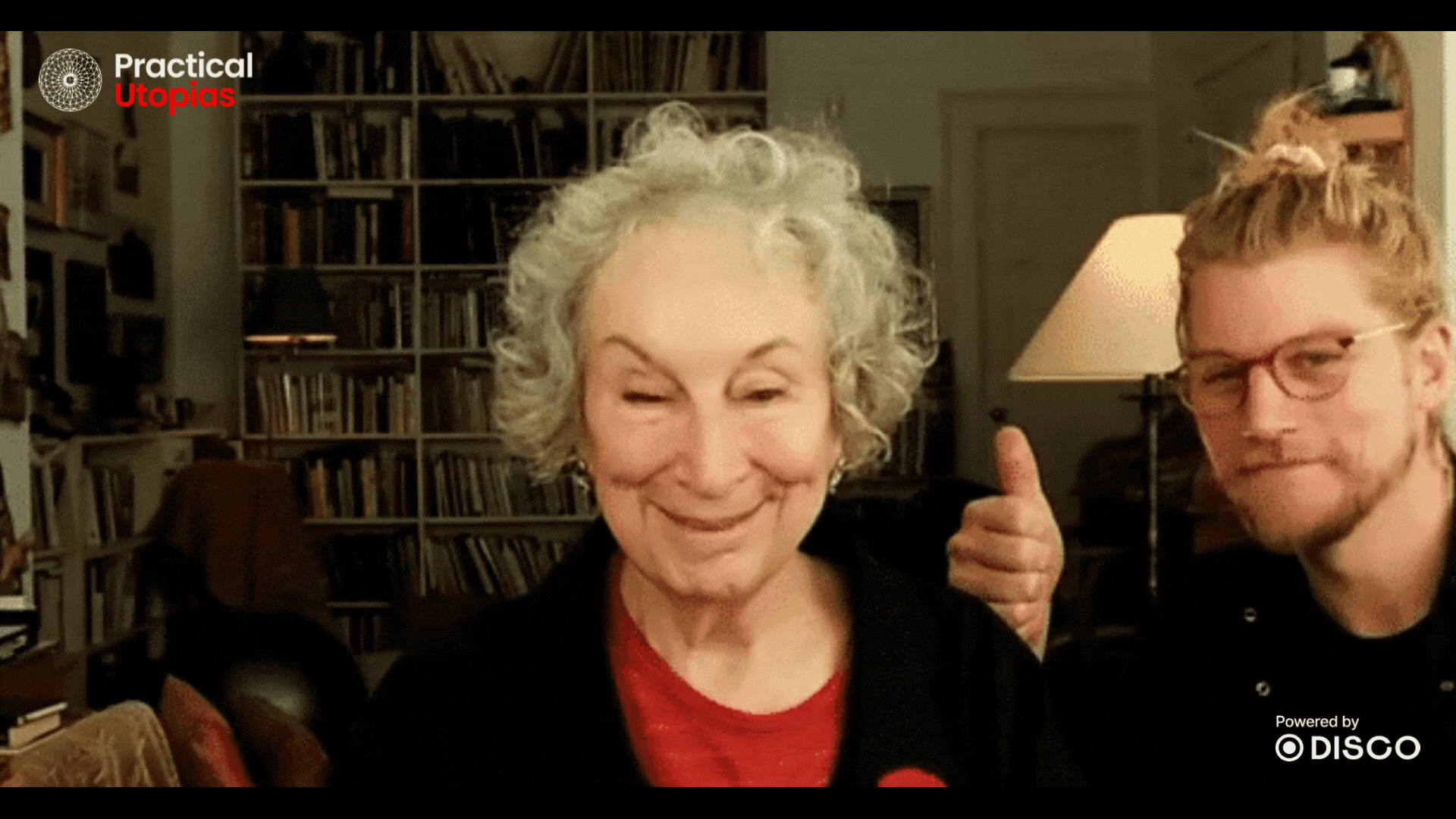
I worked with Disco over roughly a year, from October 2021 to November 2022, supporting the build and delivery of the Practical Utopias experience. I collaborated primarily with Lisa Lambert and provided direct support to Margaret Atwood during live delivery from her home office in Toronto.
The context
Disco’s team, led by Lisa Lambert (former Head of Learning), was coordinating a program with many moving parts: curriculum development with Atwood, platform considerations, an external guest lineup, facilitators, illustrators, and a large participant community.
The practical need was straightforward: create a coherent visual language and a set of collaborative tools that would help participants work together and produce outputs that could be handed off for illustration.
If the learning system worked, Practical Utopias could model a larger truth: that social learning can become a form of governance rehearsal: people practicing how to negotiate tradeoffs, align values, and co-author a future they’d actually want to live inside.
This was ambitious futures work at global scale: many stakeholders, multiple formats, tight timelines, and reputational pressure.
The program
Participants (200 Fellows, plus roughly 1,000 asynchronous participants, across 34 countries) worked in eight teams, building futures around a wide set of domains, from shelter and water to governance and wealth. Weekly guests spoke to specific themes, and included: David Suzuki, Yvonne Boyer, Bill McKibben, Jane McGonigal, Yasmeen Hassan, and Jonathan Foley, amongst others.
The challenge
How do you make a complex cohort learning experience feel clean, coherent, and facilitation-ready, without losing depth?
The program had to come together quickly, but to a high standard.
The experience needed to feel simple to participants, even when the operational machinery and many moving parts were not.
Eight facilitators had to move teams of fellows through the same learning arc, while producing distinct outcomes.
My work had to support facilitators, as well as participants, so the process could hold up week after week.
The process
The process was iterative and practical:
Briefing and alignment
Review of Disco’s written brief, goals, and evolving program shape.
Content immersion and visual research
Study of the course themes and materials, alongside a visual research phase drawing from archival imagery, diagrams, and collage references.
Learning journey mapping
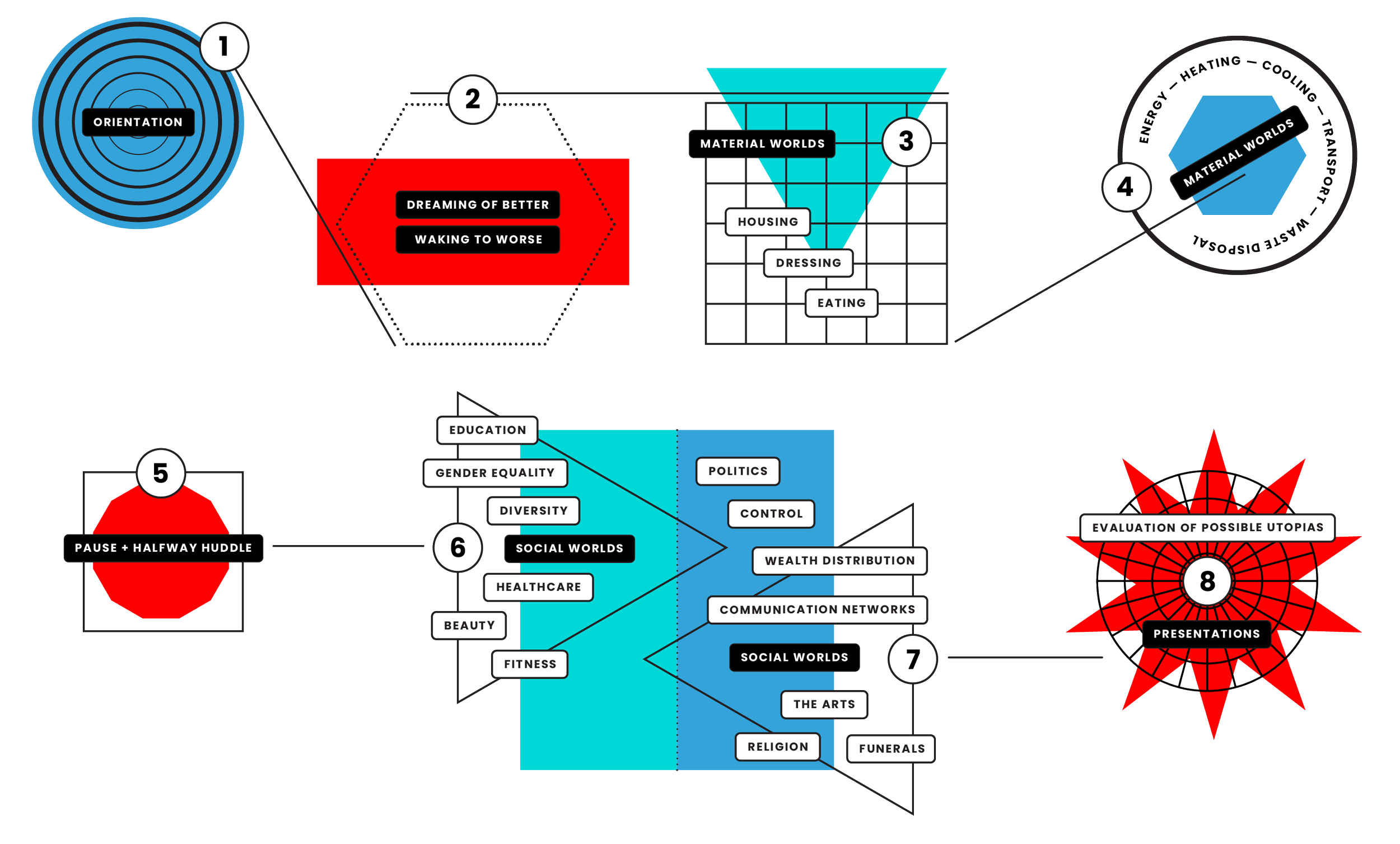
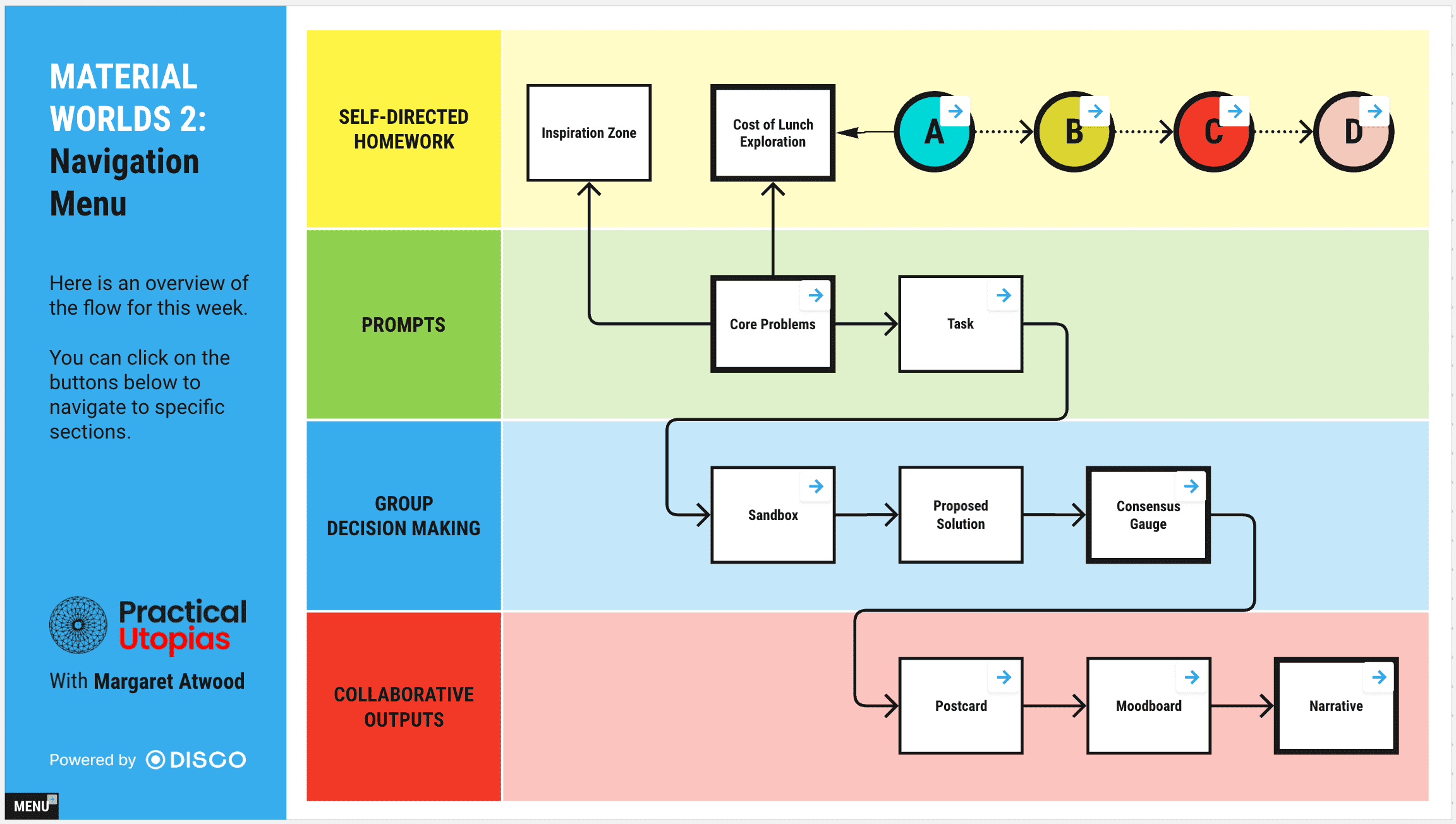
Close work with Lisa to clarify the curriculum arc and build a journey diagram that could guide both design and facilitation needs.
Design and prototyping
Web mockups and design assets in Figma, plus early sketches and prototypes for collaborative workbook tools in Miro.
Testing and refinement
Lightweight user testing, feedback loops, and adjustments to improve clarity and usability for facilitators and participants.
Configuration and rollout
Duplication and setup of the workbooks across eight cohorts, with assets prepared for animation and promotional use.
What I created
The deliverables were designed to do one thing well: help a large, diverse group of people collaborate in a structured way.
Visual identity + web
Website mockups (Figma)
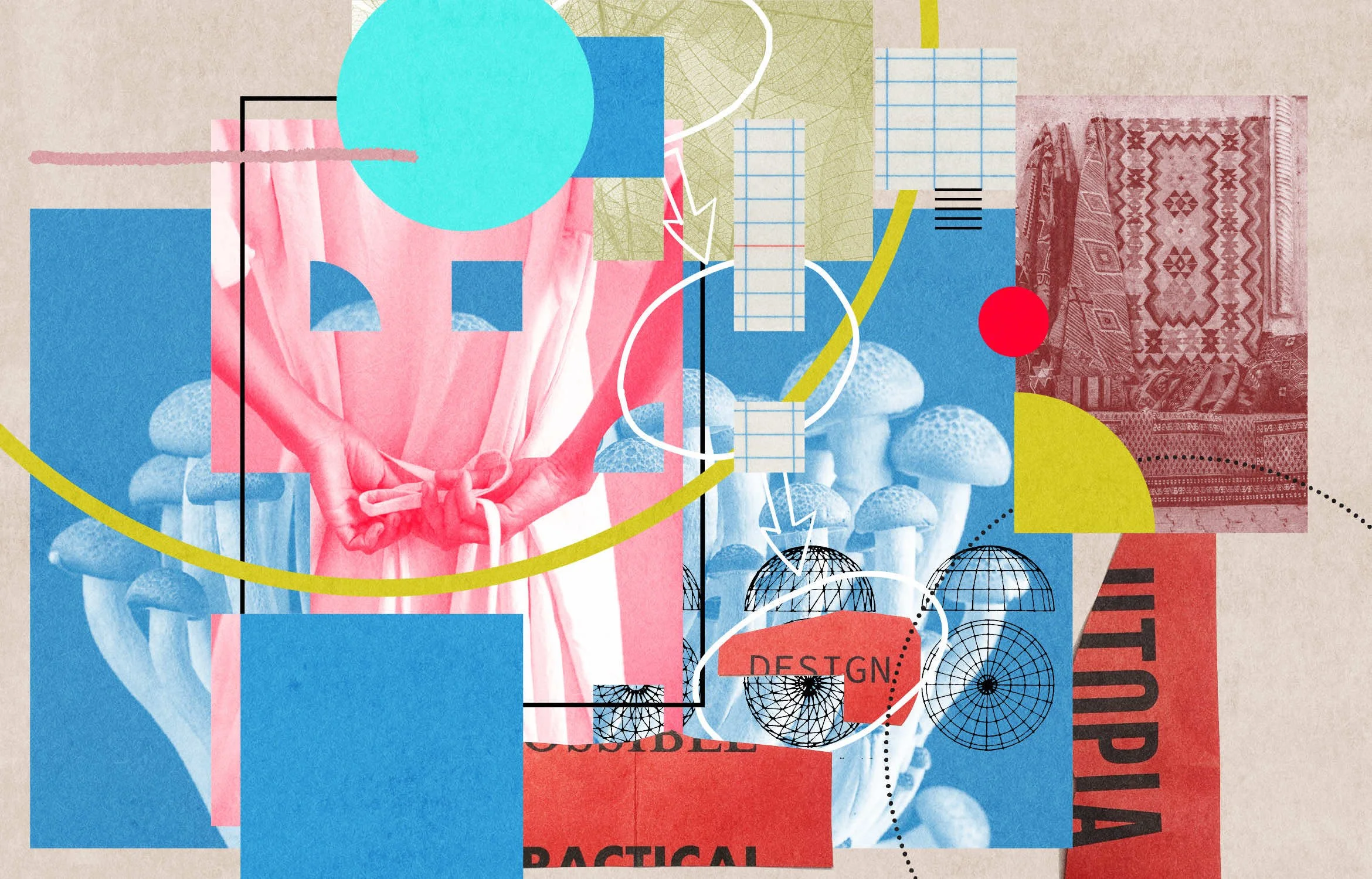
A coherent identity system (color, type, image rules)
Four core illustrations
An asset library of diagrams, illustrations, and image references
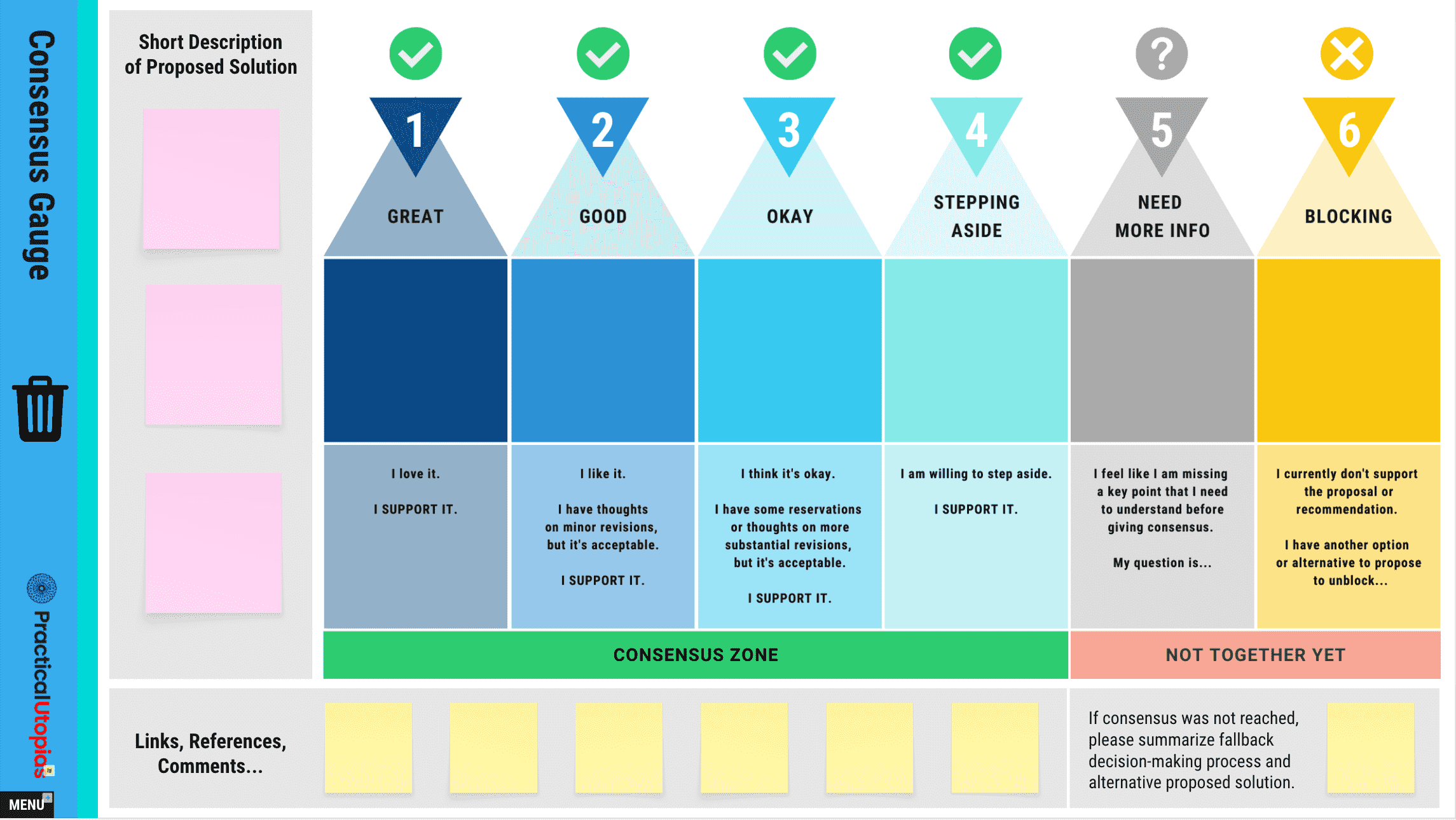
Miro workbooks and collaboration tools
A set of repeatable, facilitator-friendly workspaces and templates, including:
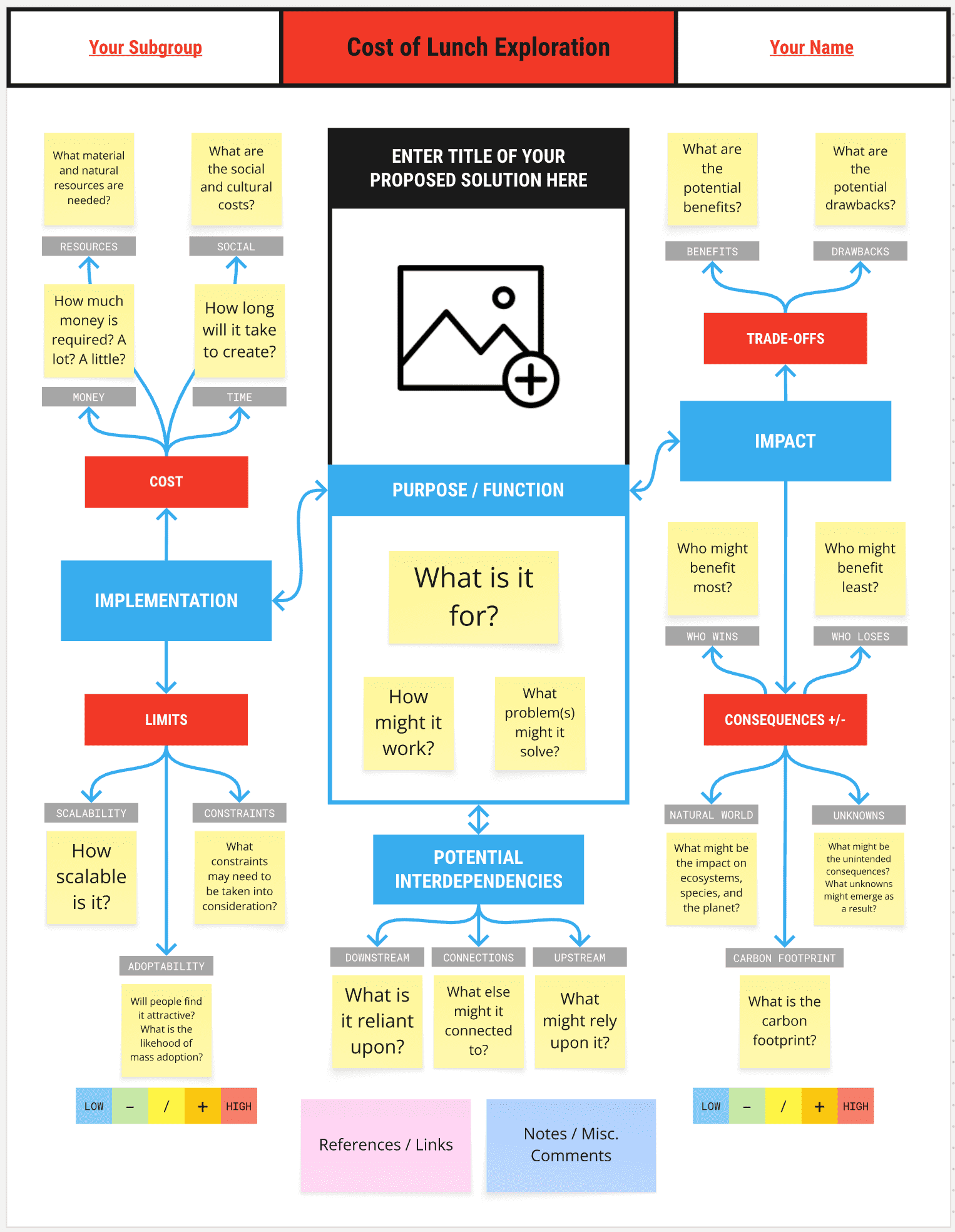
consensus gauge and decision-visibility tools
storytelling containers and narrative synthesis templates
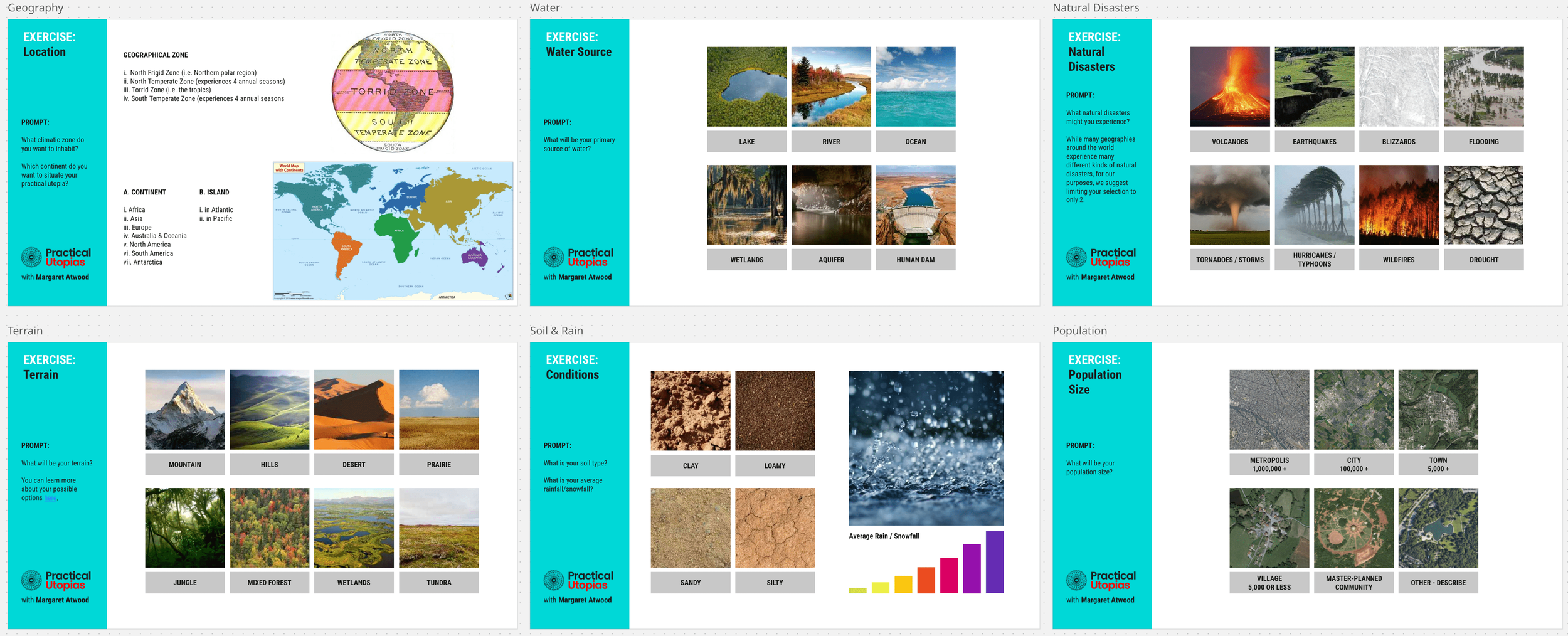
worldbuilding exercises across key domains
research sandboxes and moodboards
reflection prompts and check-in structures
illustrator-ready prompt formats to translate team visions into concept art
If there was a single “keystone” artifact, it was the workbook system. It held the week-by-week collaboration logic and made the learning journey usable at scale.
What changed
The most visible result of my contribution was coherence. The program had a shared look and feel, and the teams had a shared collaboration method. Facilitators had a structure they could rely on, and participants had a workspace that helped them move from open-ended imagination to decisions, synthesis, and output.
Lisa Lambert later reflected:
“Having the pleasure of working with you was a massive source of renewal and energy. You elevated this learning experience with your contributions.”
Reflection
This project sharpened a principle that still shapes how I work: clarity is a form of care. In complex learning environments, the designer’s job is to create containers that hold difference long enough for something real to form. Participants developed shared language, negotiated tradeoffs, and collectively authored a world they wanted to live in. My takeaway: hope needs scaffolding.